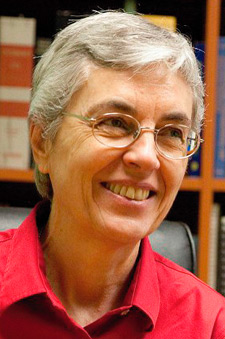
 Susan Othmer, BA, BCIAC
In the late nineties, Sue made the pivotal discovery that the target frequency had to be highly individualized for best results. The search for the optimal training frequency for each person then drove the agenda for subsequent protocol development. Significantly, this took Sue to ever lower frequencies to train those who were more seriously dysregulated. This extended the field into entirely new terrain, the infra-low frequency regime, in 2006. The exploration of this low frequency domain occupied Sue for the rest of her professional life—seventeen years. Protocol developments were presented both in training course manuals and in Sue’s Protocol Guide, which is now in its seventh edition. Sue also played a key role in the annual conferences that brought the practitioner network together both in person and on-line.
This development entailed two major conceptual shifts: the first is that the resolution of mental dysfunction may involve the context in which the neural dance is organized more than the dance itself. This context is organized at low frequencies by the glial system. The second is that the search for optimal training parameters compels a shift to an observational approach in which the therapist is guided by the brain’s response to its own signal, as opposed to the conventional manner of training the brain by way of operant conditioning. This means a shift from what might be considered a treatment model of neurofeedback to a therapy model.